

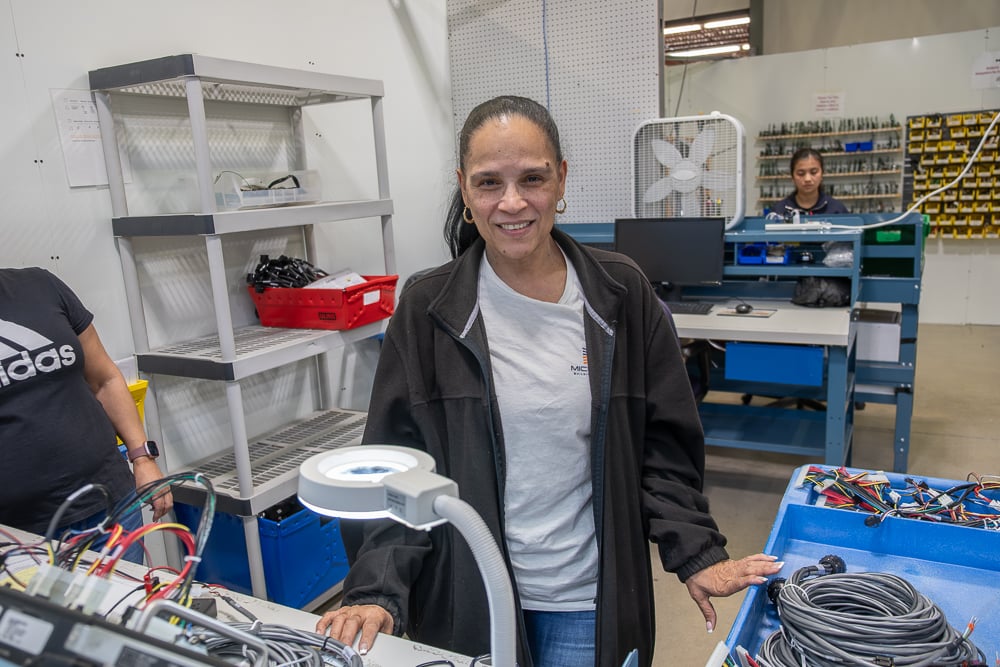


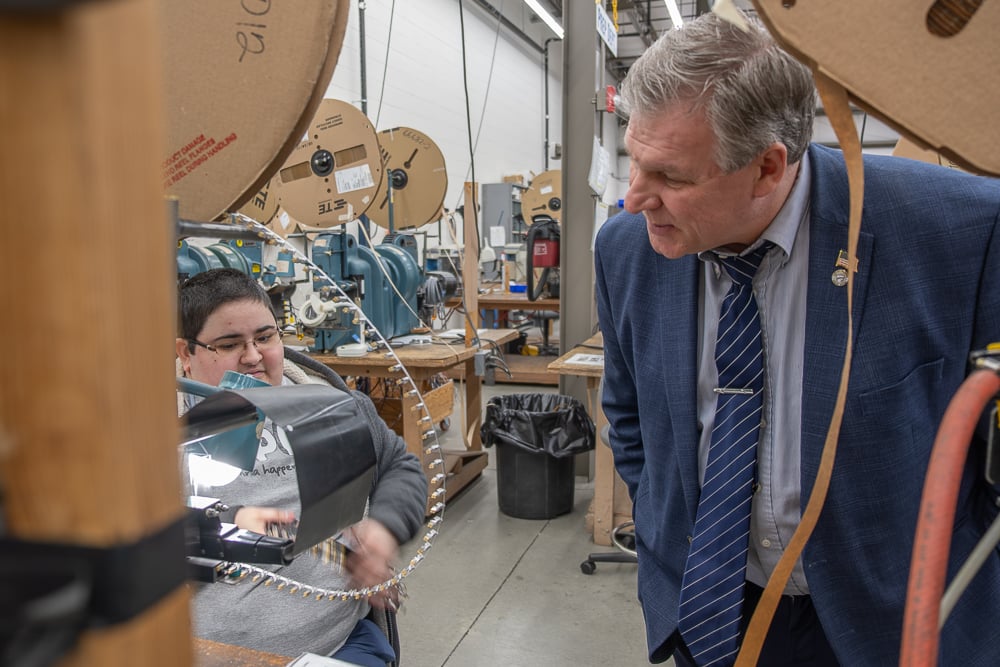
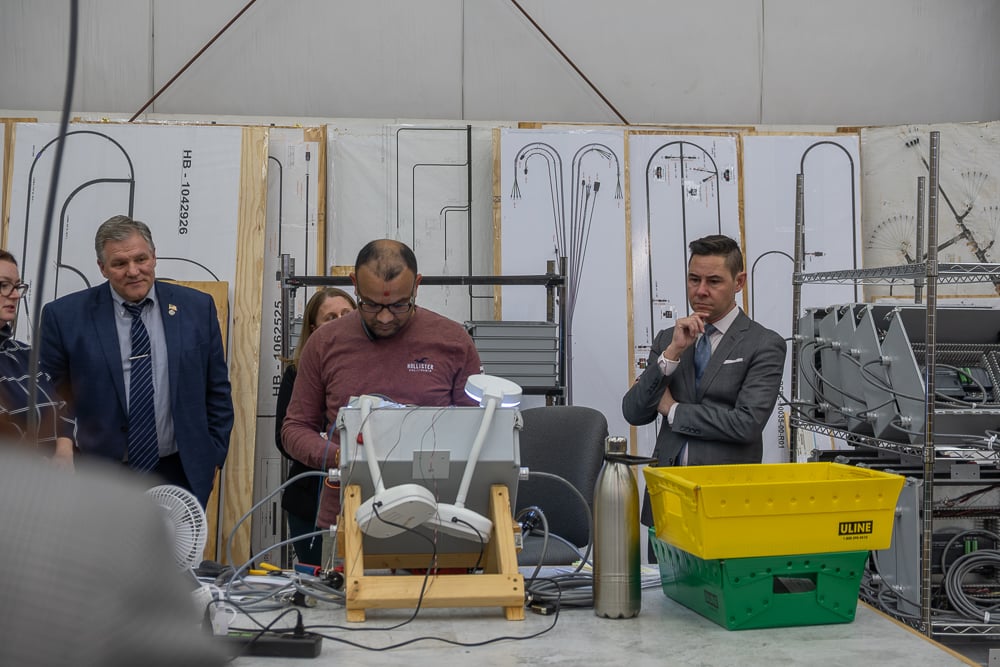
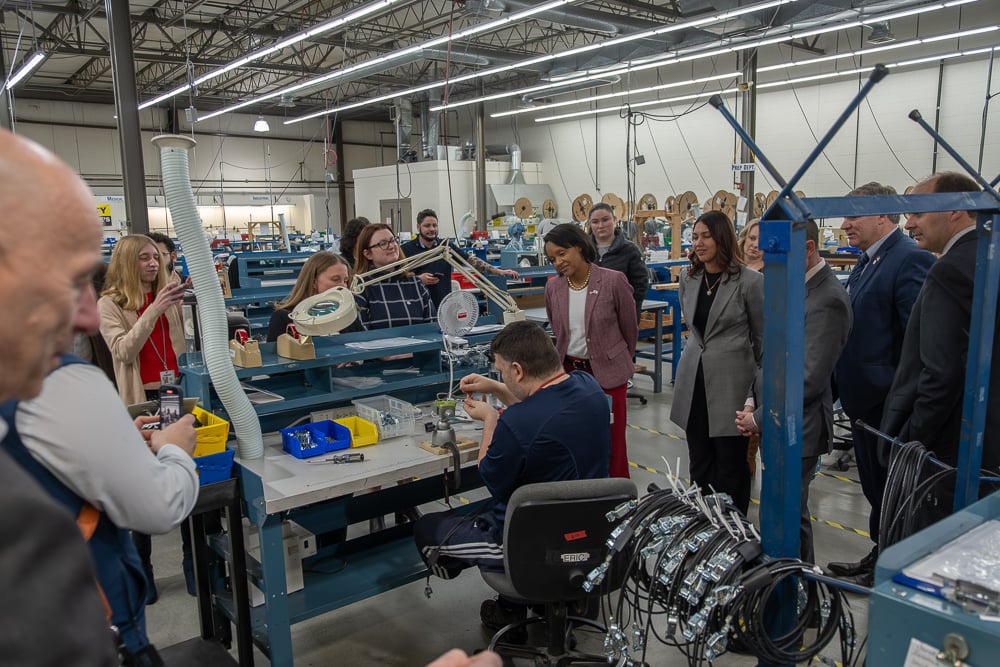
At MicroTek, a Chicopee-based manufacturer specializing in custom cable assemblies and wire harnesses, an inclusive workforce remains central to the company’s success. While the organization produces high-quality, cost-effective components used across the medical, scientific, and security industries, they foster a workplace where employees of all abilities are valued and supported.
As they prepare for an upcoming wave of retirements across leadership, customer service, and administrative roles, the company is investing in current employees to strengthen its
workforce. Funded through the support of the Workforce Trust Fund Program, MicroTek implemented ESOL training to equip MicroTek’s employees with the communication skills needed for career growth and long-term business sustainability.
We met with Erin Weinman, Executive Vice President at MicroTek, who explained their pursuit of the Workforce Training Fund Program grant. “We’re coming into a phase where we have a wave of retirements coming, and we really wanted to be able to grow more employees to fill some vacant positions,” explained Weinman, “One of the barriers to doing that is that many people at MicroTek, their English isn’t quite strong enough for the customer interactions that occur. And so, we felt that if we provided the English classes, potentially that would open a pathway for these employees to new roles.”
MicroTek’s commitment to providing ESOL training to its employees demonstrates the heart of their mission to support and invest in its workforce. “Our mission to employ people with disabilities is a focus of everything that we do,” shares Weinman. “It’s a key factor in everything that we do at Microtek, that everybody needs support. Some of our employees need support because English isn’t their first language, and so that is a support that we really felt we wanted to provide to our employees.”
The training providers of the ESOL classes were English for New Bostonians, a Boston-based organization that partners with employers and communities to expand access to English language learning for adult immigrants. We interviewed Suzanne Metro, the Business Partnerships Manager, on how English for New Bostonians set the class up for Microtek’s employees.
“The total length of the training is 144 hours per level, and we started with a workforce needs assessment to determine the highest need for English levels among the workforce at Microtek,” explains Metro. “There’s a beginner level, focusing on foundational workplace needs, and then the intermediate class is more focused on application of workplace English skills. It’s during paid time, which is supported by the Workforce Training Fund Program. When it came time to deliver the classes, ENB brought in Valley Opportunity Council (VOC) as our trusted ESOL partner to deploy a highly qualified, local ESOL instructor from their team to deliver the classroom instruction. We leaned on VOC for their deep roots in the local community and couldn't have done it without them. ”
.jpg?width=1000&height=667&name=CommCorp-32%20(1).jpg)
.jpg?width=1000&height=667&name=CommCorp-48%20(1).jpg)
.jpg?width=1000&height=667&name=CommCorp-31%20(2).jpg)
Another benefit of the ESOL training classes was meeting the exact curriculum needs for the workplace, with classes taking place right at MicroTek’s facilities. “We collect basic information about their educational background, previous experience learning English, and also about their jobs at Microtek,” explains Metro, “We also do a survey with managers that helps inform the curriculum. And all of that goes into the training plan,”
The customized approach stood out to MicroTek’s team and has been a key to success. Weinman shared, “They were open to including vocabulary, processes, and policy reviews. I was grateful because that was a bonus.”
Just hours before graduating from the program, ESOL participant Yolanda Cruz reflected proudly on how far she had come. Cruz, who started working at MicroTek’s assembly and currently works in the test department, shares her experience with the ESOL classes at MicroTek. “It was good because now I can communicate a little better. Now I’m not shy. I can talk to employees without being scared,” says Cruz. “With the teacher, we learned a lot. We learn how to say some words from the company; we write stuff about ourselves and what we do in the company, and I can communicate with my coworkers even better.”
Expanding on the impact of the ESOL trainings, Erin Weinman shares, “The biggest change that I’ve seen is an improvement in their confidence in speaking English. What we have seen is a higher level of engagement and confidence in our employees who have taken the ESOL classes.”
Since the ESOL training, employees have been given the opportunity to grow professionally by gaining the ability to speak fluently in two or more languages. This demonstrates why vocational ESOL is important for workforce development. “It’s key to creating inclusive and welcoming environments, bringing workplace English training into the workplace,” says Metro. “It eliminates the barriers that exist in accessing community ESOL classes. There’s also benefits to this asset of speaking another language. They gain the benefit of multilingual leadership from entry level to management to leadership, which creates opportunities for them to continuously grow, have a good rapport and trust among all of their employees.”
As Microtek looks toward the future, its investment in ESOL training reflects more than a response to workplace challenges but a long-term commitment to its people. By equipping employees with the communication skills needed to grow into new roles, the company is not only preparing leadership transitions but also strengthening its internal pipeline. With support from the Workforce Training Fund Program and in partnership with English for New Bostonians, MicroTek continues to show that business success and employee empowerment go hand in hand, fostering greater confidence, communication, and opportunity so that every employee can grow, contribute, and thrive.
While the training has strengthened communications and opportunities in the workplace, its impact is far beyond the building. For many participants, the classes have also created new confidence in everyday life, from communicating comfortably at local grocery stores to speaking more fluently at home with family members. For Cruz, that has translated into a greater quality of life. “Now I can even speak to my grandson,” Cruz said, beaming with pride.
.png?width=640&height=360&name=THUMBNAILS%20(10).png)
.png?width=640&height=360&name=Blog%20+%20Constant%20Contact%20Newsletter%20Graphics%20for%20Team%20Spotlight%20%26%20Grantee%20Spotlights%20%20(14).png)